
Caitlin Cahill is an Associate Professor of Urban Geography & Politics at Pratt Institute. She is also co-coordinator of the Social Justice/Social Practice Minor and teaches within the Department of Social Science and Cultural Studies in the School of Liberal Arts & Sciences.
Her work sits at the meeting point of scholarship, organizing, and public engagement. Rather than studying cities from a distance, Cahill works with communities, young people, and local organizations to understand how urban life is shaped by power, inequality, and resistance.
She is a community-based urban and youth studies scholar, an environmental psychologist, and an organizer from New York City. This combination gives her work a distinctive character. It is academic, but also grounded in everyday experience. It is critical, but also practical. It asks what a more livable and just city could look like, and who should be involved in creating it.
Research rooted in participation
Cahill’s research focuses on the intimate, everyday experience of racial capitalism. Her work examines how large systems become visible in ordinary life: in housing, schools, immigration policy, policing, displacement, and state violence.
A central part of her method is participatory praxis. This means that research is not only done about communities, but with them. People most affected by urban injustice are treated as knowledge-makers, not simply as subjects of study.
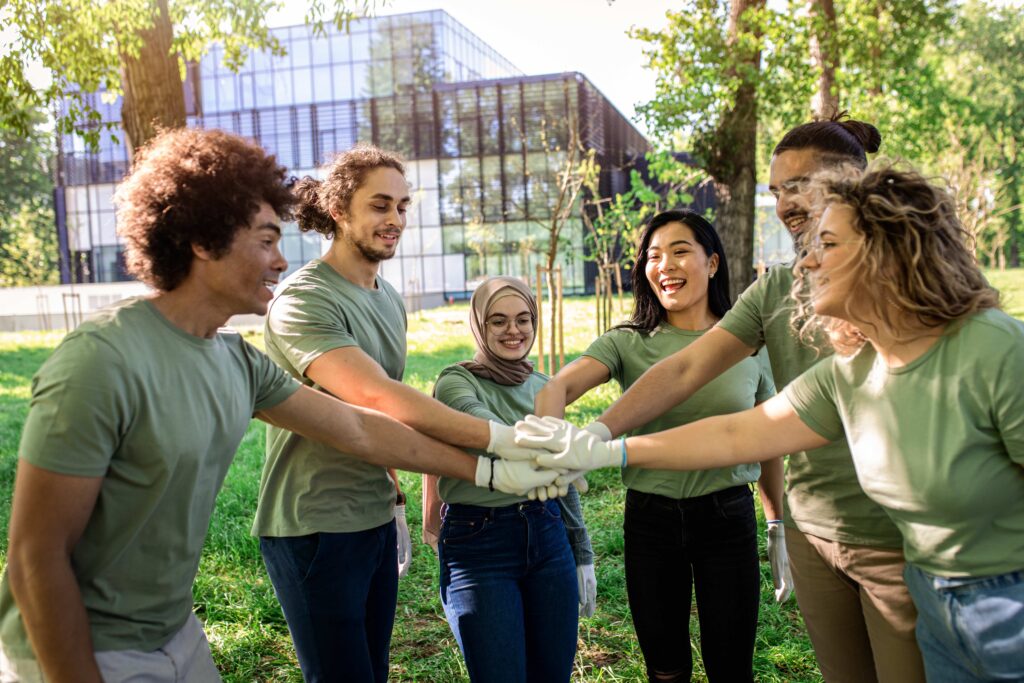
This approach is especially important in her work with young people. Cahill has collaborated on projects that center youth perspectives, public data, community memory, and collective action. Her research asks how people living through crisis can also produce analysis, strategy, and alternative visions for the future.
Projects across New York and Utah
Cahill’s projects show the breadth of her public scholarship. Recent work includes community engagement for the Housing SLC five-year housing plan and the anti-displacement plan Thriving in Place in Utah. She has also been involved in Re:Play, an exhibition at the Center for Architecture.
Her critical participatory research projects include the Emancipatory Urban Futures project, the Bushwick Action Research Collective, and Growing Up Policed, developed in partnership with the Public Science Project and Make the Road New York.
In Salt Lake City, she co-founded the Mestizo Arts & Activism Collective, an intergenerational social justice think tank led by the urgent concerns of young people. This work reflects one of the strongest themes in her career: the belief that young people are not only future citizens, but present political thinkers and actors.
Recognition
Cahill’s work has been published widely across interdisciplinary journals, including Area, Cultural Geographies, Environment & Planning A, City & Society, Gender, Space & Culture, ACME Journal of Radical Geography, and the Journal of Youth Studies. Her writing has also appeared in edited collections on gentrification, social geography, transcultural cities, and youth participatory action research.
Her public scholarship has received several forms of recognition. These include special recognition from the ACLU for work with young people on educational rights and immigration, the “Speaking Truth to Power Award for Excellence in Collaborative Research” from URBAN, and the Jan Monk Distinguished Professorship of Feminist Geography from Gender, Place & Culture.

She has also received Taconic Fellowship awards from the Pratt Center for Community Development. Currently, she serves as an editor at Metropolitics and sits on the editorial boards of Community Development, Children’s Geographies, and Curriculum Inquiry.
Education
Cahill earned her BA from Middlebury College, her MA from Hunter College, and her MPhil and PhD from the Graduate Center, CUNY. Her doctorate in Environmental Psychology reflects the foundation of her work: a deep interest in how people experience, interpret, and transform their environments.
Her biography is defined by collaboration. Across research, teaching, organizing, and publishing, Caitlin Cahill’s work asks how communities can imagine freer urban futures while confronting displacement, policing, environmental harm, and inequality in the present.