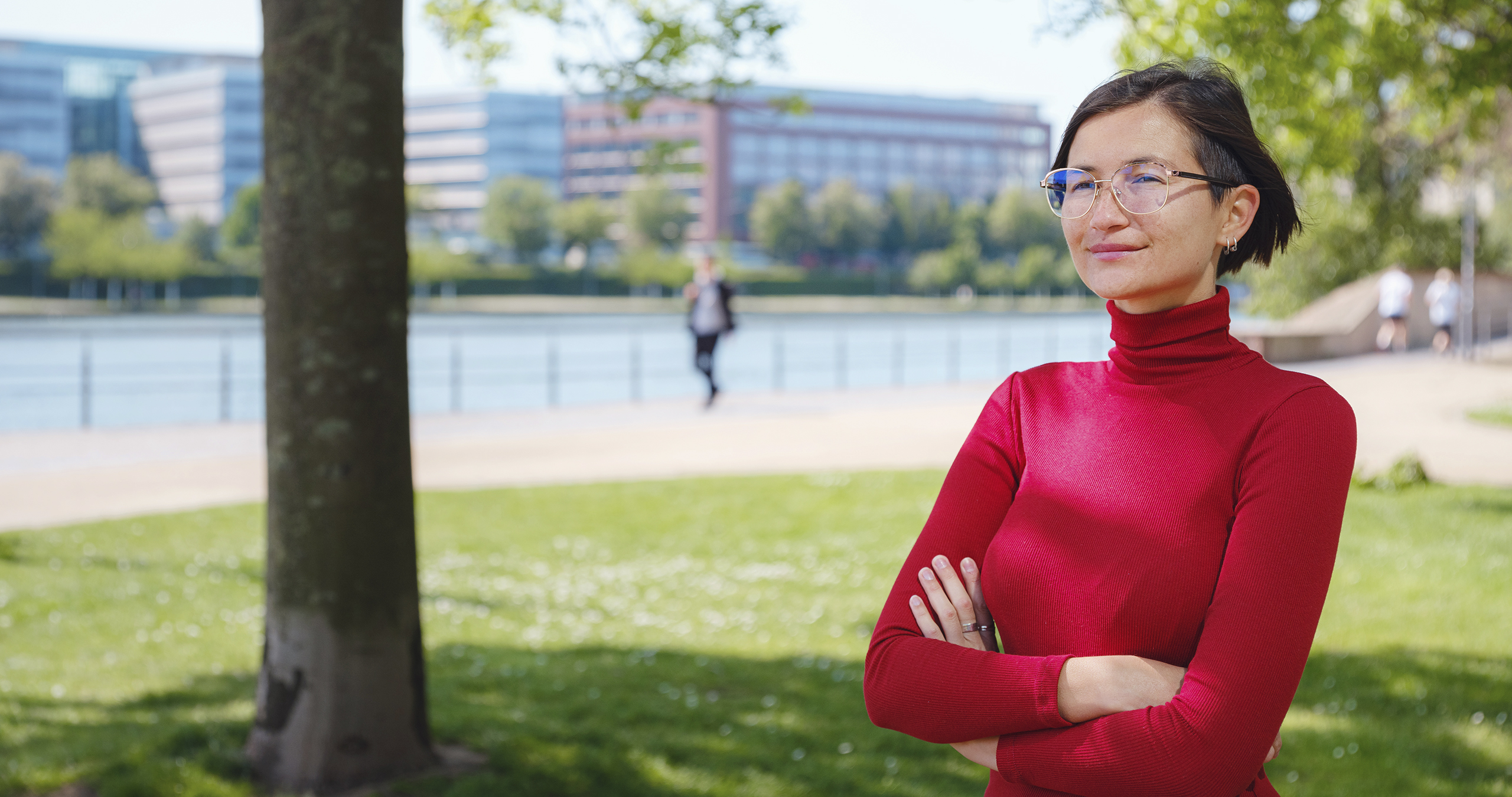
Leigh T. Graham is an Assistant Professor in Environmental Psychology whose work focuses on cities during moments of pressure, conflict, and rebuilding. Her research looks closely at urban redevelopment, especially when communities are forced to negotiate change after disasters, crises, and large-scale disruptions.
Her academic interests bring together contentious politics, participation, and the social consequences of redevelopment. In her work, cities are not treated as fixed landscapes. They are living arenas where public decisions, private interests, community voices, and structural inequality meet.
Graham’s research pays particular attention to race, class, and geography. These forces shape who gets heard in redevelopment processes, who receives resources, and who is left to carry the cost of recovery.
Academic background
Graham holds a PhD from the Massachusetts Institute of Technology. This background places her work within a tradition of research that connects cities, institutions, public policy, and social change.
She is also faculty in the Department of Public Management at John Jay College of Criminal Justice. There, she directs the Tow Policy Advocacy Fellowship at the Prisoner Reentry Institute. This role reflects a broader commitment to policy, justice, and the practical consequences of institutional decision-making.
Her biography shows a scholar who moves between research and public engagement. She studies redevelopment not only as an academic topic, but as a process that affects neighborhoods, housing systems, and everyday life.

Research on recovery and redevelopment
A major part of Graham’s work examines what happens after disasters. Recovery is often described as a technical process: rebuilding homes, restoring services, reopening streets, and securing funding. Graham’s research suggests that recovery is also deeply political.
After a disaster, decisions must be made quickly. Yet those decisions can reproduce old inequalities or create new ones. Some neighborhoods gain attention and investment, while others struggle to be recognized. Some residents are invited into planning processes, while others are pushed to the margins.
Her work has explored several important cases:
- Hurricane Sandy recovery in Rockaway, Queens and the Lower East Side;
- Community economic redevelopment in Lower Manhattan after September 11, 2001;
- The struggle to preserve public housing in post-Katrina New Orleans;
- Affordable housing and neighborhood redevelopment through consulting work.
These examples show the range of Graham’s research. She does not study redevelopment in the abstract. She studies it through places where crisis reveals the deeper structure of urban inequality.
Participation, power, and public voice
One of the central questions in Graham’s biography is participation. Who gets to participate when a neighborhood is remade? Who defines what recovery should mean? Who decides whether redevelopment serves existing residents or replaces them?
These questions are especially important in cities where land, housing, and public investment are unevenly distributed. Redevelopment can be presented as improvement, but improvement is never neutral. It can bring resources and stability, but it can also create displacement, exclusion, and loss of community control.
Graham’s work helps show that participation is not just a meeting, a survey, or a public hearing. Real participation depends on power. It depends on whether residents can influence outcomes, not simply respond to decisions already made.
This makes her research relevant to planners, policymakers, housing advocates, and community organizations. It offers a way to understand redevelopment as both a physical and political process.

Graham’s research has appeared in respected academic venues. Her work on Hurricane Sandy recovery in Rockaway and the Lower East Side was published in Global Environmental Change. Her research on Lower Manhattan after September 11 appeared in Economic Development Quarterly. Her analysis of public housing struggles in post-Katrina New Orleans was published in JAPA and Housing Policy Debate.
These publications show a consistent concern with crisis, recovery, and urban justice. They also show her ability to connect local case studies with broader questions about policy and power.
Beyond academia, Graham has served as a consultant to foundations and non-profits on affordable housing and neighborhood redevelopment. Before joining CUNY, she was Vice President of the Board of Directors of the Allston Brighton Community Development Corporation in Boston.
A career focused on just redevelopment
Leigh Graham’s biography is shaped by a clear intellectual and civic focus: how cities change, who shapes that change, and who benefits from it.
Her work shows that redevelopment is never only about buildings. It is about memory, resources, public voice, political conflict, and the future of communities. By studying disasters, housing, and neighborhood transformation, Graham helps reveal the human stakes behind urban policy.
Her career stands at the intersection of environmental psychology, public management, urban studies, and social justice. Across these fields, she continues to ask how cities can recover and redevelop without leaving their most vulnerable residents behind.